Cotswolds
When the Famous Move In: What the Cotswolds’ New Celebrity Neighbours Mean for Local Life
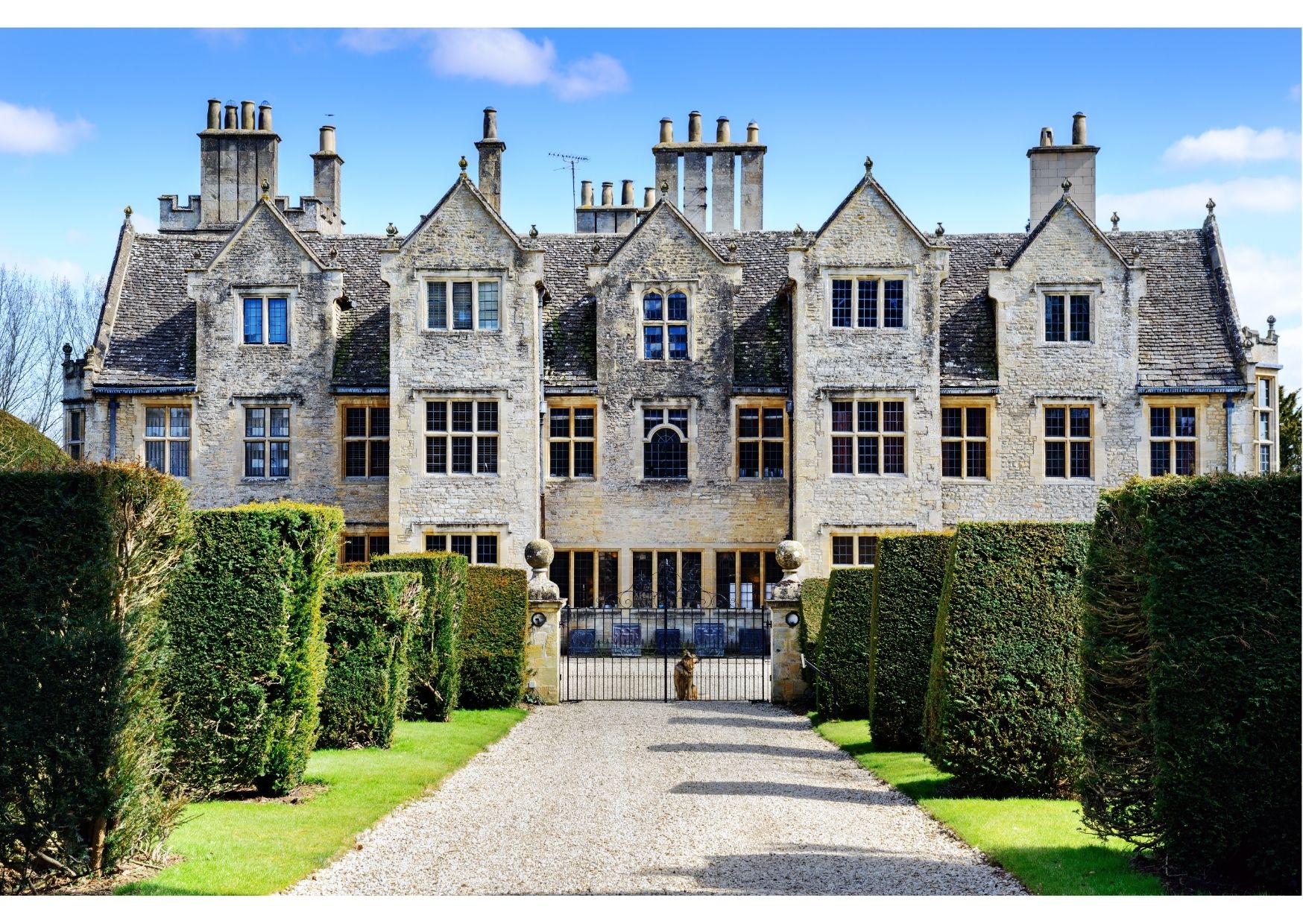
From royal households to Hollywood names, the Cotswolds has become one of Britain’s most sought-after countryside addresses. But as the area’s profile grows, what does that mean for the people who already call it home?
There was a time when the Cotswolds’ greatest claim to fame was its honey-coloured stone, ancient churches and the quiet rhythm of village life.
These days, the guest list is rather different.
The Cotswolds has become one of the UK's most recognisable celebrity enclaves, attracting actors, musicians, television personalities, entrepreneurs and members of the aristocracy. Its combination of beautiful countryside, proximity to London and a degree of privacy has made the region particularly appealing to people accustomed to living under the public gaze.
And now, perhaps inevitably, the Sussexes have returned to the conversation.
Prince Harry and Meghan Markle returned to Britain with their children in August 2026, with the family understood to be basing themselves outside London. The Cotswolds has been widely reported as their intended area, although the precise details of their private residence have not been publicly confirmed.
For the Cotswolds, this is hardly an entirely new phenomenon. The couple themselves previously rented a country home on the Great Tew Estate in Oxfordshire shortly after their wedding in 2018.
But their return comes at a moment when the relationship between the Cotswolds and its increasingly famous residents is worth examining.
Why the Cotswolds?
The appeal is easy to understand.
For someone accustomed to London, Los Angeles or other major cities, the Cotswolds offers something increasingly difficult to find: space without being completely cut off from the rest of the country.
London can be reached relatively easily. Oxford is nearby. Airports are accessible. Yet within minutes of leaving a main road, the landscape changes dramatically, stone villages, fields, country lanes and market towns replacing traffic and glass.
Property specialists have noted that the area's reputation has developed beyond its traditional appeal as a rural retreat. Knight Frank describes the Cotswolds as having become a globally recognised lifestyle brand, with high-profile residents adding another dimension to its appeal. Names associated with the region include David and Victoria Beckham, Kate Moss, Hugh Grant and Jeremy Clarkson.
For celebrities, the attraction is not simply owning a beautiful house. It is the possibility of living somewhere where being famous does not necessarily mean being constantly visible.
That creates an interesting paradox.
The very people who move to the Cotswolds for privacy can, simply by arriving, make the area considerably more famous.
The celebrity effect
When a well-known person buys or rents a home in an area, the consequences can extend beyond their own front gate.
There is an obvious economic argument.
Visitors may be curious about the villages, pubs, restaurants and shops associated with famous residents. Businesses can benefit from increased interest in an area already popular with tourists. A higher profile can support hospitality, retail and tourism, sectors that are an important part of the local economy.
The Cotswolds' international image is already powerful. Celebrity residents can add another layer to that image, turning places that were once known mainly to locals and regular visitors into destinations recognised around the world.
There is also employment.
Large country properties require gardeners, cleaners, builders, security professionals, estate managers and other workers. Renovating a substantial property can involve local tradespeople and contractors, while ongoing household employment can create a small ecosystem of jobs.
But there is another side to the equation.
The price of becoming desirable
The Cotswolds has a housing problem that did not begin with celebrities.
Cotswold District Council's housing data highlights the pressure created by the area's desirability. In May 2025, the average property price in Cotswold District was around £419,000, compared with £269,000 across the UK. The average price for a first-time buyer was approximately £323,000. Average private rent was £1,175 a month in June 2025.
Those figures matter because the Cotswolds is not simply a collection of second homes and weekend retreats. It is home to teachers, nurses, farmers, shop workers, hospitality staff, tradespeople and families who may have lived in the area for generations.
For them, rising property values can be a mixed blessing.
A homeowner may welcome an increase in the value of their house. Someone trying to buy their first home may see exactly the same increase as another obstacle.
This is where the celebrity conversation becomes part of a much larger question: Who can afford to live in the Cotswolds?
It would be simplistic to blame high-profile residents for the area's housing pressures. The underlying causes are considerably broader, including limited housing supply, demand from people relocating from cities, second-home ownership, retirement moves and the area's longstanding popularity.
But celebrity interest can contribute to the perception, and potentially the market appeal, of the Cotswolds as an exclusive lifestyle destination.
When the village becomes a brand
There is another concern for residents: what happens when somewhere stops being primarily a place and starts becoming a brand?
The Cotswolds has always attracted visitors. Bourton-on-the-Water, Stow-on-the-Wold, Chipping Campden and the surrounding villages have long been photographed, visited and celebrated.
Yet social media has accelerated the process.
A village pub can become an Instagram location. A country hotel can become a destination in its own right. A celebrity sighting can generate headlines within hours.
That can bring valuable business, but it can also change the experience of living somewhere.
Residents may find familiar roads busier, popular beauty spots crowded and local businesses increasingly oriented towards visitors rather than the people who live nearby.
The tension is particularly noticeable because the Cotswolds' greatest attraction is precisely its sense of authenticity.
People come looking for traditional village life.
The more successful that image becomes, the harder it can be to preserve.
Privacy cuts both ways
For famous residents, privacy is understandably important. For ordinary residents, however, privacy matters too.
A village is a community, not a film set.
Most people who live in the Cotswolds do not want their local pub, school gate or village shop transformed into a permanent celebrity-watching opportunity. The challenge is therefore one of mutual respect: famous newcomers need space to live ordinary lives, while existing residents need their communities to remain places where ordinary life is possible.
Interestingly, some of the region's appeal to celebrities depends on exactly that discretion.
The Cotswolds works because people generally get on with their business.
A celebrity can walk into a pub without necessarily becoming the evening's entertainment. A famous person can shop locally without turning the high street into a photo opportunity.
That culture of understatement may be one of the area's most valuable assets.
More than a property story
Perhaps the most useful way of looking at the arrival of people such as Harry and Meghan is not to ask whether celebrities are good or bad for the Cotswolds.
The more interesting question is what kind of Cotswolds the region wants to become.
A wealthy new resident can bring investment, employment and attention. They can support local businesses and contribute to the economic life of the area.
But a village cannot live on prestige alone.
It needs affordable homes. It needs schools, doctors, public transport, shops and pubs. It needs young people to be able to stay. It needs farmers and tradespeople. It needs the people who open the doors of the businesses that visitors come to enjoy.
And ultimately, that means remembering something that is easy to lose amid the headlines.
The Cotswolds is not famous because famous people live there.
Famous people live there because the Cotswolds is already somewhere special.
The challenge now is ensuring that its growing popularity does not make it impossible for the people who give the region its character to afford to stay.
As Harry and Meghan begin another chapter of their lives in Britain, they will become part of a much older story, one about the enduring appeal of the English countryside, and the delicate balance between welcoming newcomers and protecting the communities that were here first.
For all the latest on what’s happening in the Cotswolds, check out What’sOn?XL in CotswoldXL Magazine.
See Related Articles & Features
.jpg)
.jpg)
.jpg)

issue 29
See Our Latest Issue of the Magazine.
See great content for this months digital magazine.
read now